Why Robots Need Your Hands — And How You Can Help
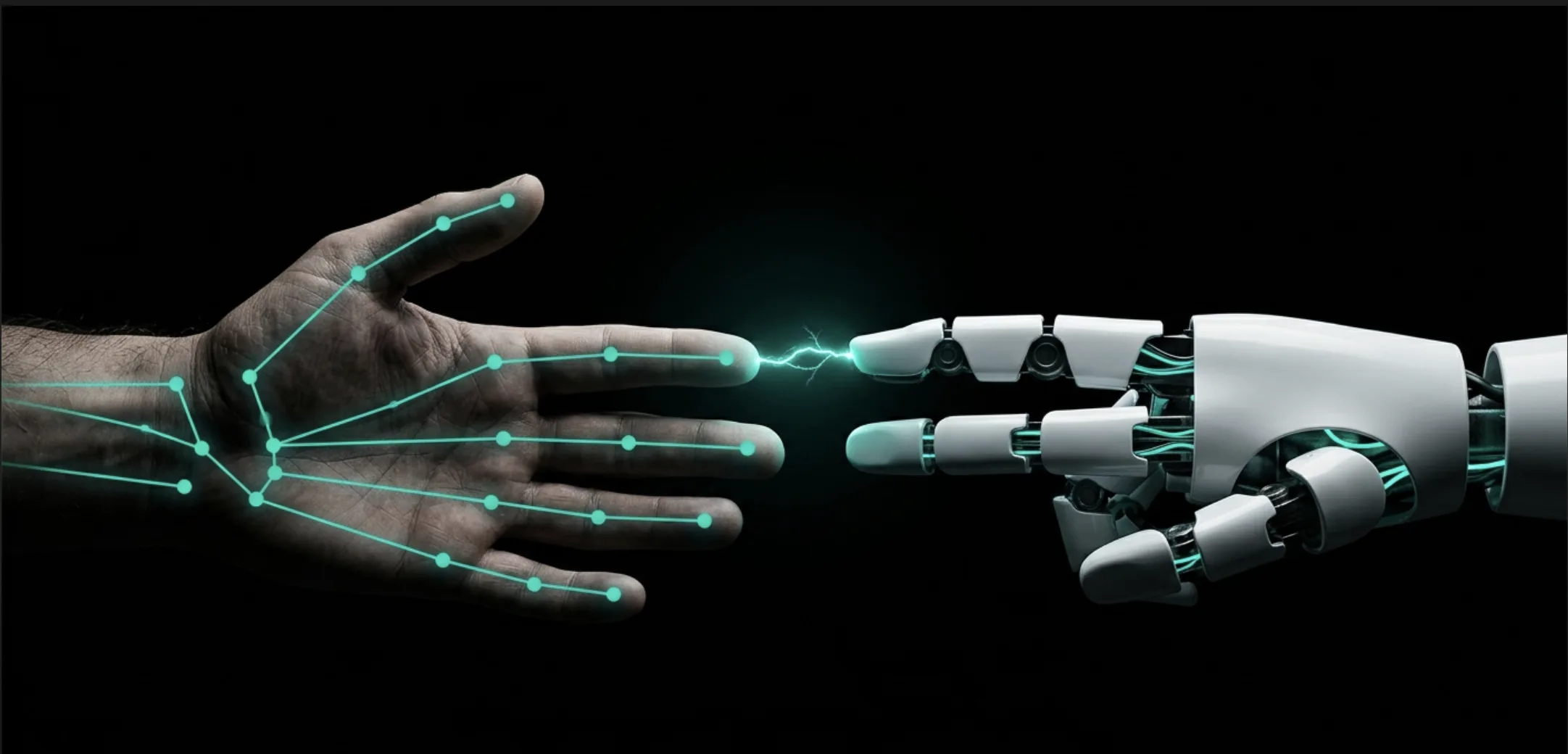
The most advanced robots in the world are stuck. Not because of a lack of computing power or sensors — but because they have never watched a human hand do something ordinary.
The robot manipulation problem
In recent years, robots have learned to play chess, beat world champions at Go, and generate images from text. Yet the average robot still struggles to pick up a glass of water without knocking it over.
The reason comes down to data. Language models learned to write by reading billions of sentences. Image models learned to generate pictures by training on hundreds of millions of photos. Robots learning to manipulate physical objects need something different: footage of human hands doing real tasks, from a first-person point of view.
This type of footage is called egocentric video — and there is a severe shortage of it.
Why your perspective matters
Robots do not see the world the way a security camera does. They operate from a first-person point of view, positioned at roughly the height and angle of a person's head. For a robot to learn to chop vegetables, it needs to have seen thousands of examples of a human chopping vegetables — from that same angle, in different kitchens, with different knives and different lighting conditions.
That data does not exist at scale. Most publicly available video datasets were built for other purposes. The footage that does exist was often collected in controlled lab settings, which fails to capture the real-world variation robots need to generalize.
What researchers actually need is footage of ordinary people doing ordinary things, captured from their own point of view.
The annotation layer
Raw video is not enough. Before a robot can learn from footage, every frame needs to be analyzed and labeled: where are the hands, what objects are being touched, what action is happening, how much force is being applied, what is the sequence of steps.
This annotation process — done correctly — transforms a simple video of someone cooking pasta into a structured dataset that a robot's learning algorithm can actually process. It is the difference between raw material and training-ready data.
The European gap
The demand for this kind of data is growing fast. Humanoid robots are moving from research labs into real environments: warehouses, hospitals, homes. The companies building them need training data that reflects real-world diversity — different environments, different lighting conditions, different ways of doing things.
In Europe, there is an additional layer: GDPR. Data collected for AI training must respect strict privacy standards. That means European robotics companies building products for the EU market need data collected in Europe, under EU law, with proper consent and privacy safeguards.
That gap is where contributors matter most.
What a contributor actually does
You wear a small mount on your head or chest — or simply hold your phone — and film yourself doing a task. Cooking, cleaning, assembling something. Twenty to thirty minutes of footage, submitted through a simple interface.
Your face is automatically blurred before anything is processed. Your footage is annotated by a multi-layer pipeline and packaged into a format that robotics researchers and companies can directly use to train their models.
You do something ordinary. Somewhere, a robot gets a little better at doing it too.
Why now
The robotics industry is at an inflection point. The hardware is ready. The algorithms exist. The missing piece is data — specifically, diverse, high-quality, GDPR-compliant egocentric footage from real environments across Europe.
EgoVista is building that dataset, one contributor at a time. We are early stage, and joining now means being part of the network from the beginning.
If this resonates with you, sign up takes two minutes.
👉 Join the contributor network — egovista.app/contribute
EgoVista is a European data company specializing in egocentric video datasets for robotics manipulation training. Our annotation pipeline follows GDPR and EU AI Act compliance standards.